
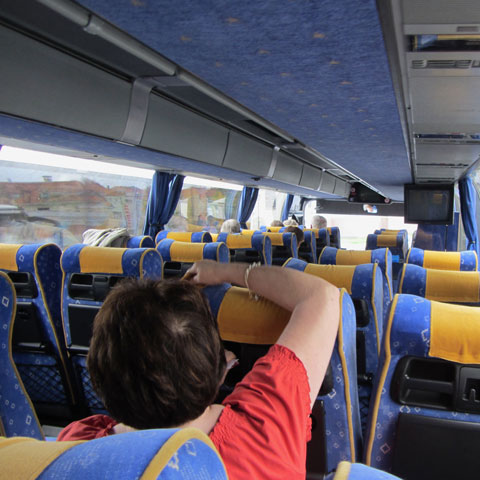
After breakfast, we boarded our awaiting bus for an excursion outside of Vilnius itself to the Trakai Castle Museum.
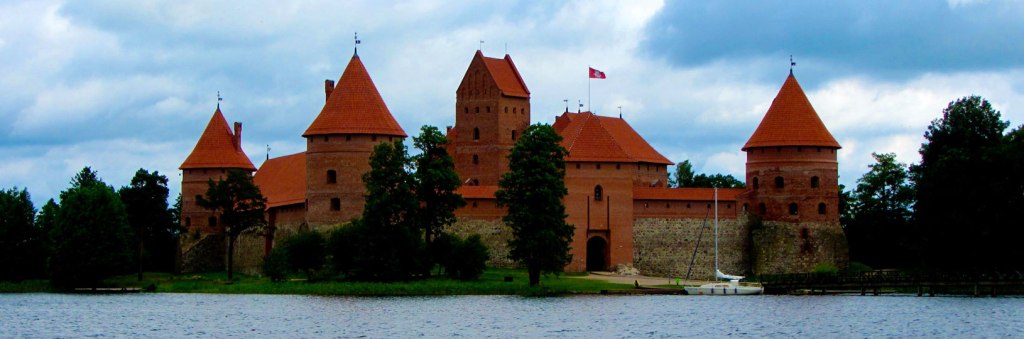
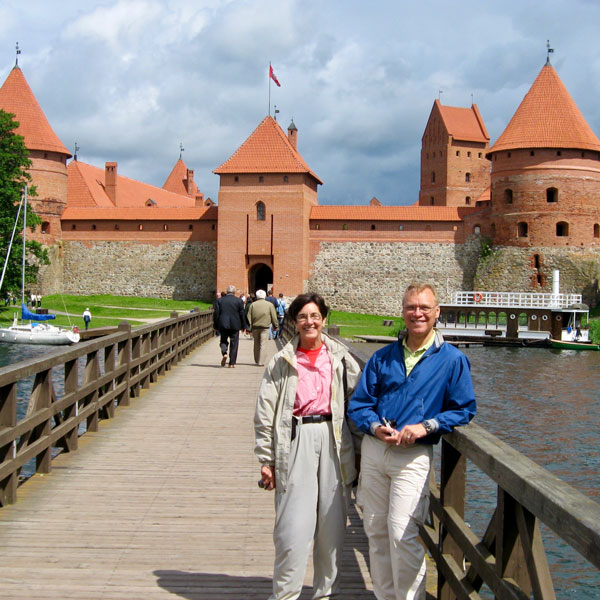
Some background on Trakai Castle: By order of Grand Duke Kęstutis, construction of a stone castle began on the largest of three lake islands in the 14th century. Major works were completed by his son, Grand Duke Vytautas the Great, who died in 1430 in this castle without ever being crowned as King of Lithuania. Its location was considered strategic for defense, until the Polish-Lithuanian army defeated the Teutonic Order in the Battle of Grunwald, after which its importance diminished and it fell into ruin. Then, after years of various uses, from fortification to palace to guest residence to romantic ruin, reconstruction was begun by the Lithuanian people (with resistance from their Soviets overlords) into what we see today: a popular tourist destination.
Trakai Castle
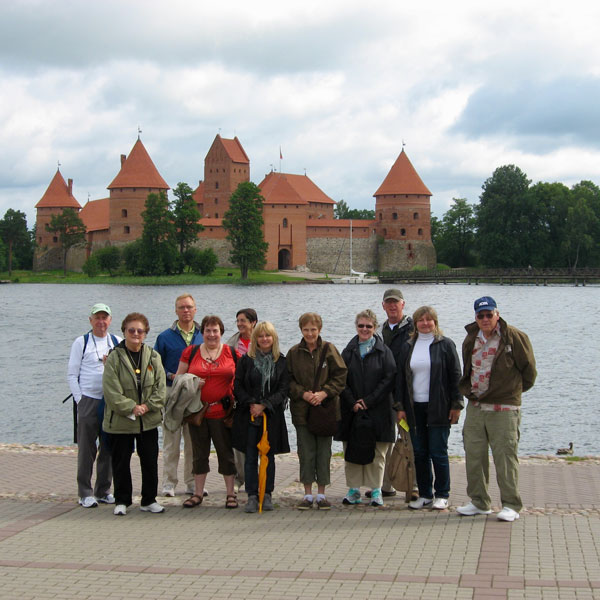
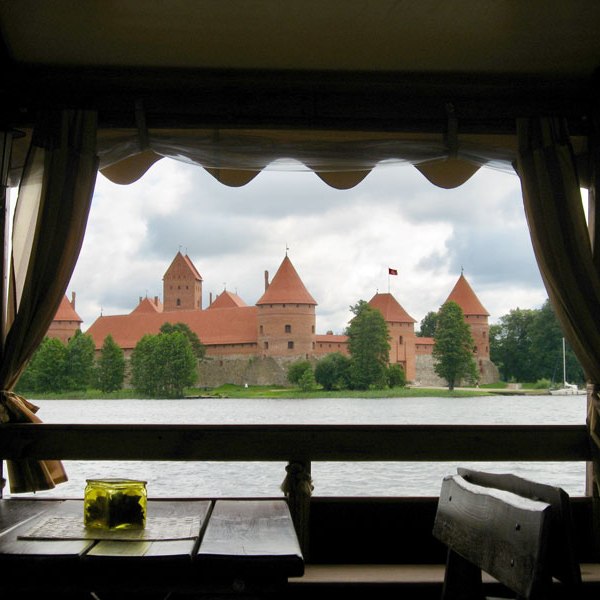
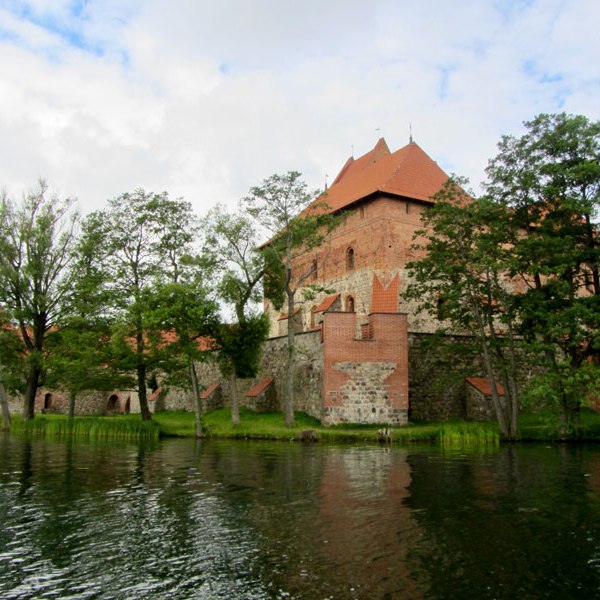
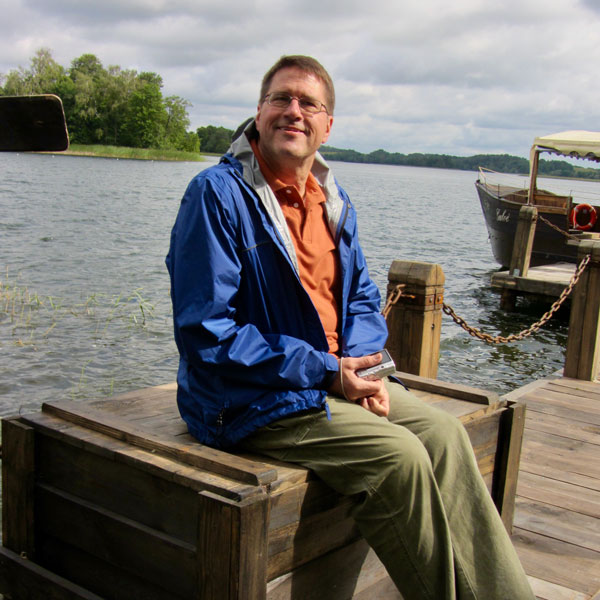
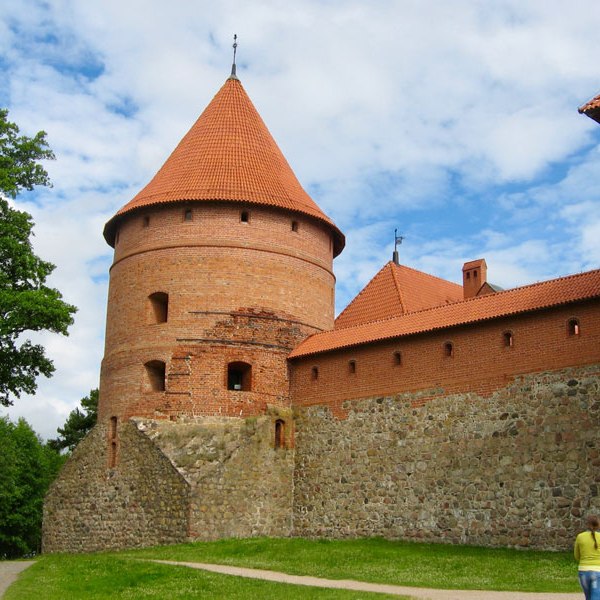
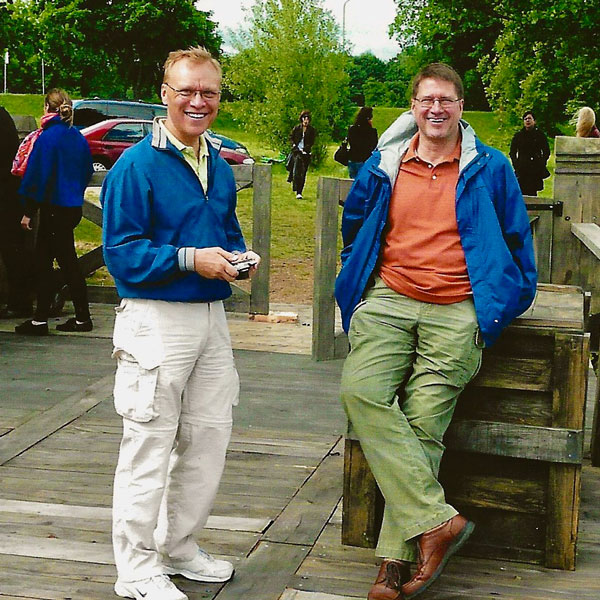
Of course, taking the ferry to the castle was just part of “the experience.” (Our departure from the castle was less dramatic. We exited on foot, crossing the lake via a wooden walkway that bridged the gap between the mainland and the castle.)
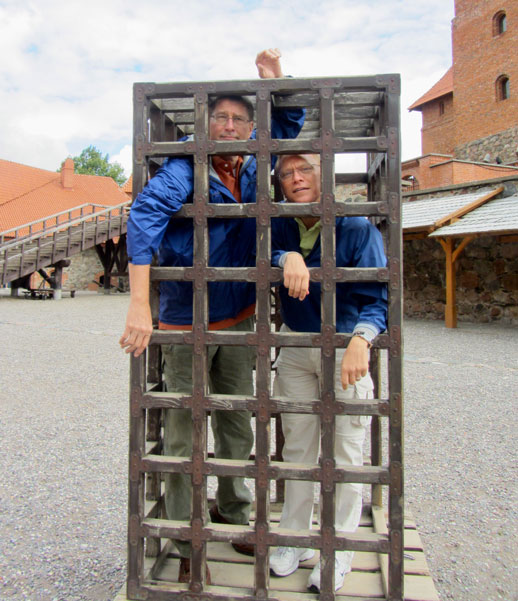
Inside the castle grounds, we skipped the available pillory, opting for a little together time in an iron cage. Once liberated, we began wandering through the various buildings that ringed the open courtyard.
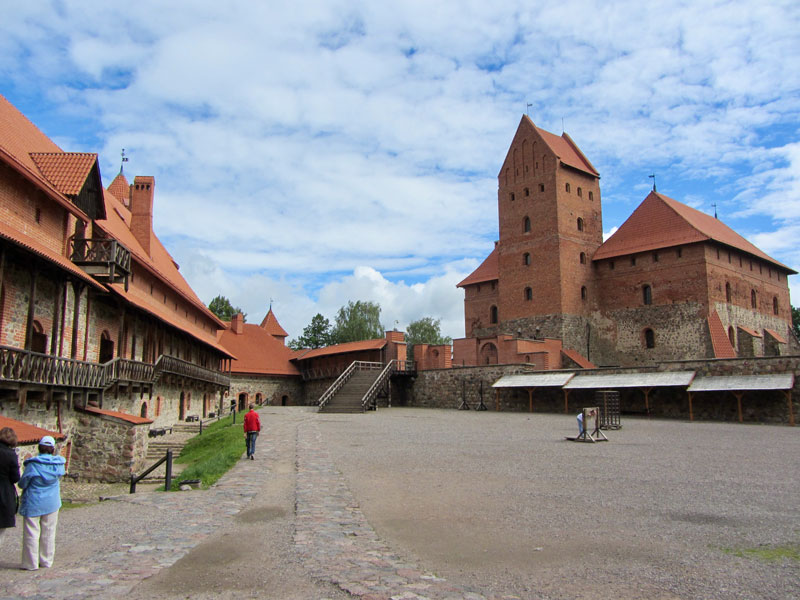
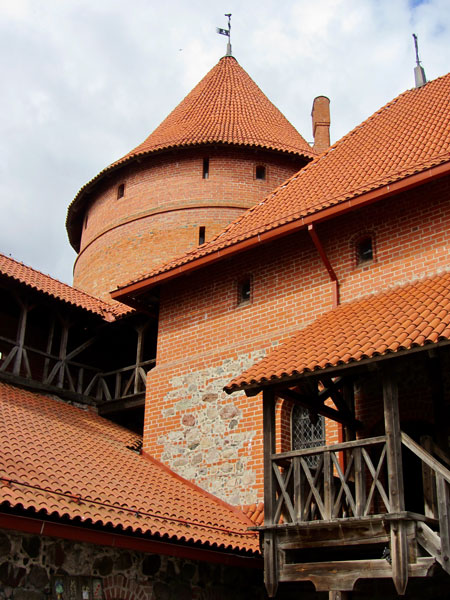
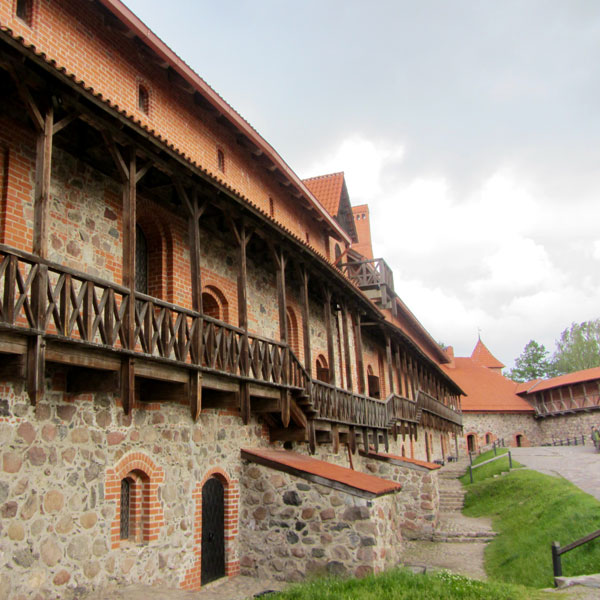
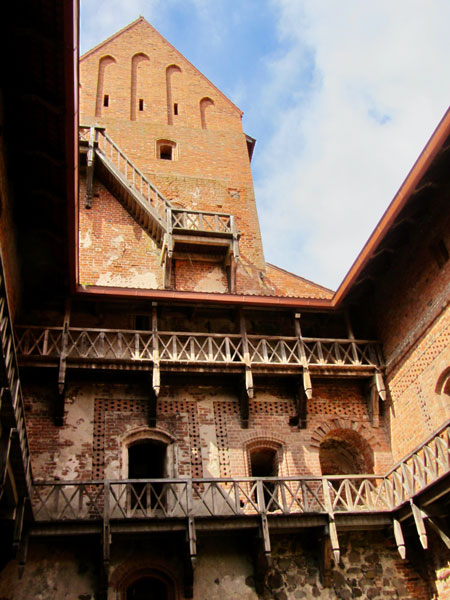
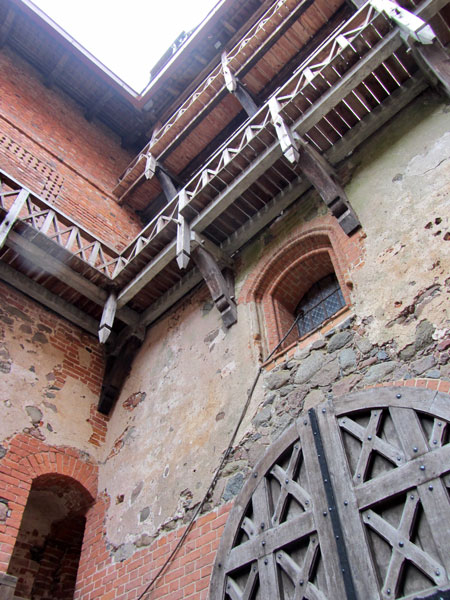
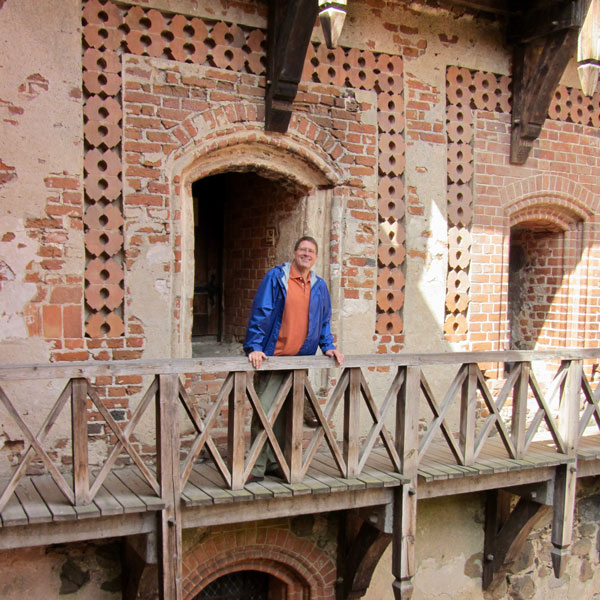
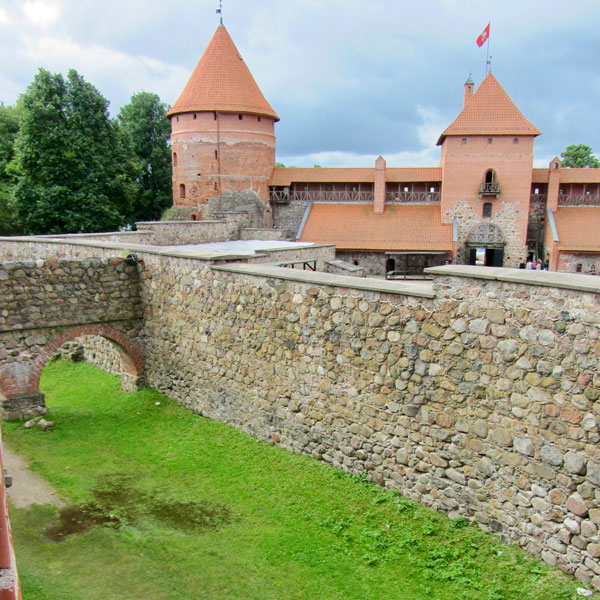
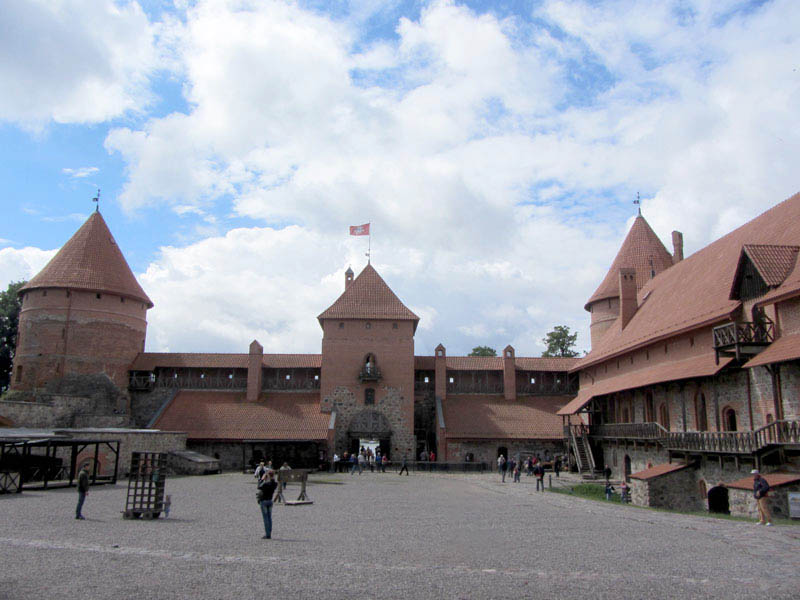
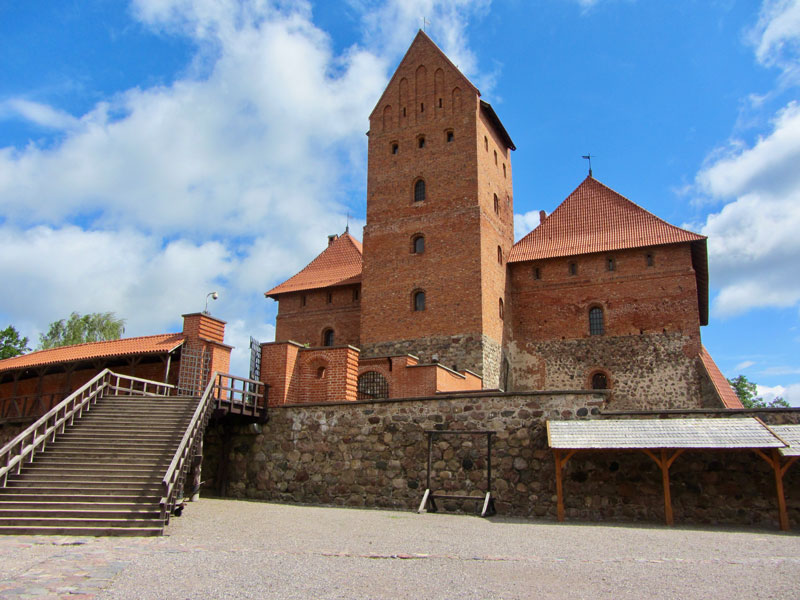
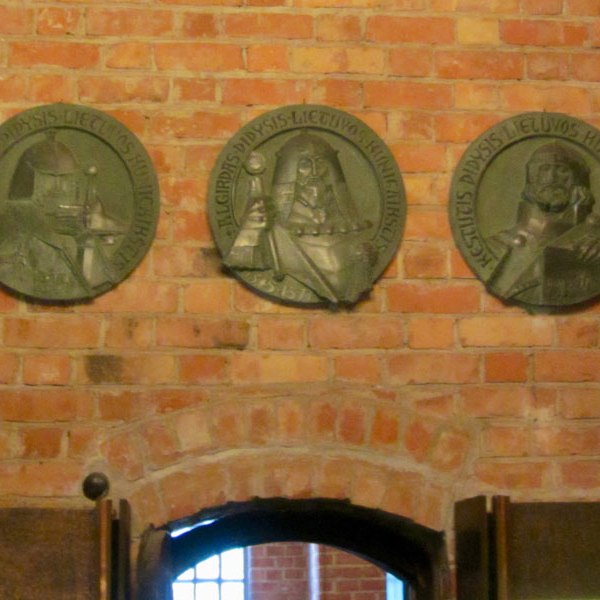
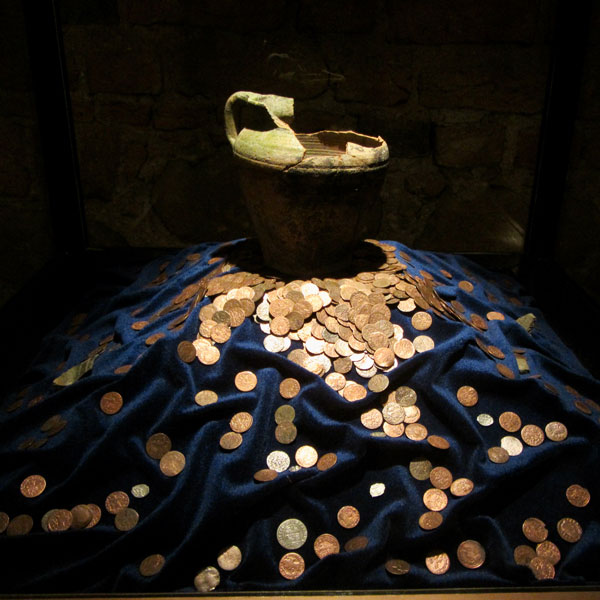
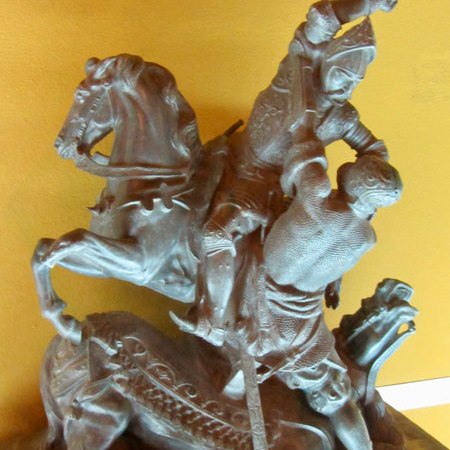
After spending (the allotted) time wandering between the buildings, we toured the exhibits of collected historical memorabilia in the castle museum and shop.
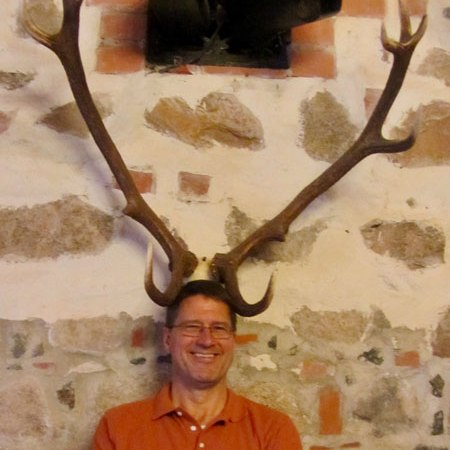
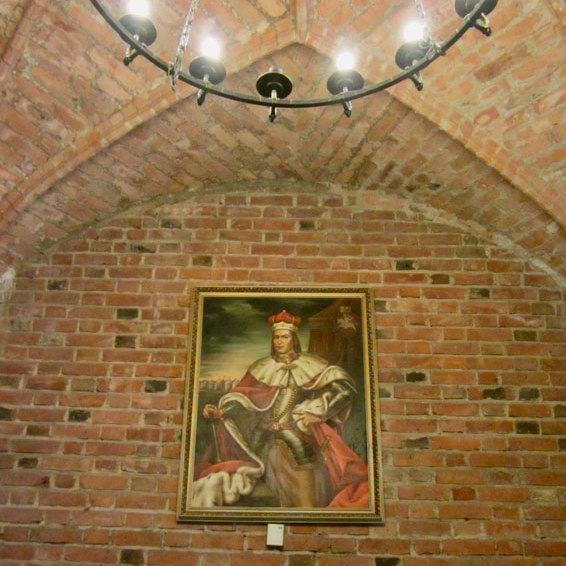
Leaving the castle behind, we walked into the nearby Karaite neighborhood of Trakai, for a cooking lesson and lunch.
Karaite Village heritage site
It all started in 1398 when Vytautas, the Grand Duke of Lithuania, brought some 380 families belonging to this ethnic group to Trakai after his victorious battle in Crimea in the 14th century. After settling in Trakai, the Karaite community formed two distinct groups – warriors and civilians. The warriors protected the castles and the bridge leading to Trakai Island Castle, with civilian Karaites serving as clerks and translators for the grand duke.
The community has dwindled in size significantly over the past five centuries. Yet, they have maintained a foothold here, overcoming and outlasting the attempts of tsars, Nazis and Bolsheviks to assimilate or eliminate them. (I read recently that their “religion” is considered a branch of Judaism. Somehow, they were ethnically-designated non-Jewish by the Nazis and survived the Holocaust.)
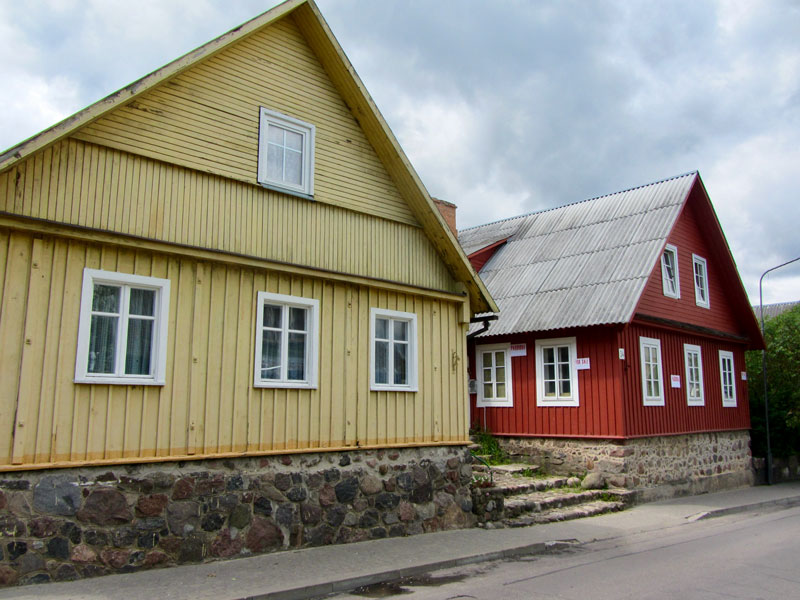
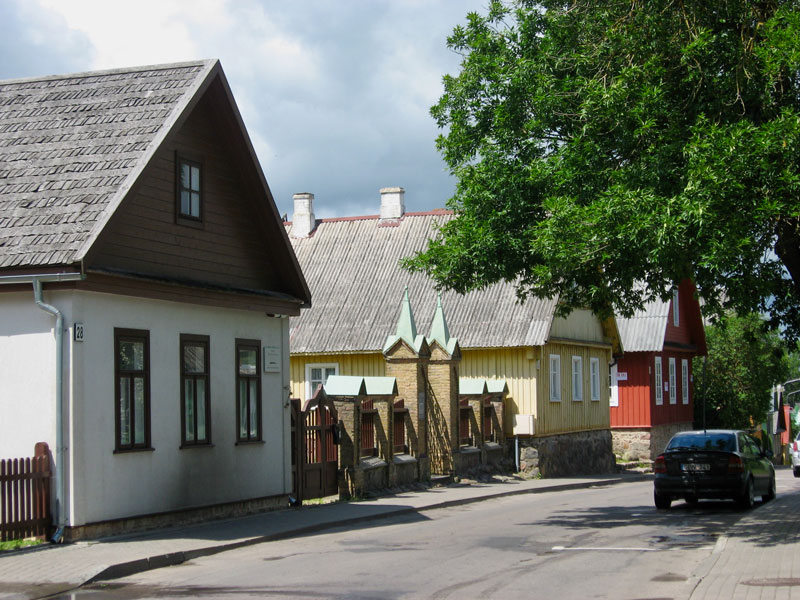
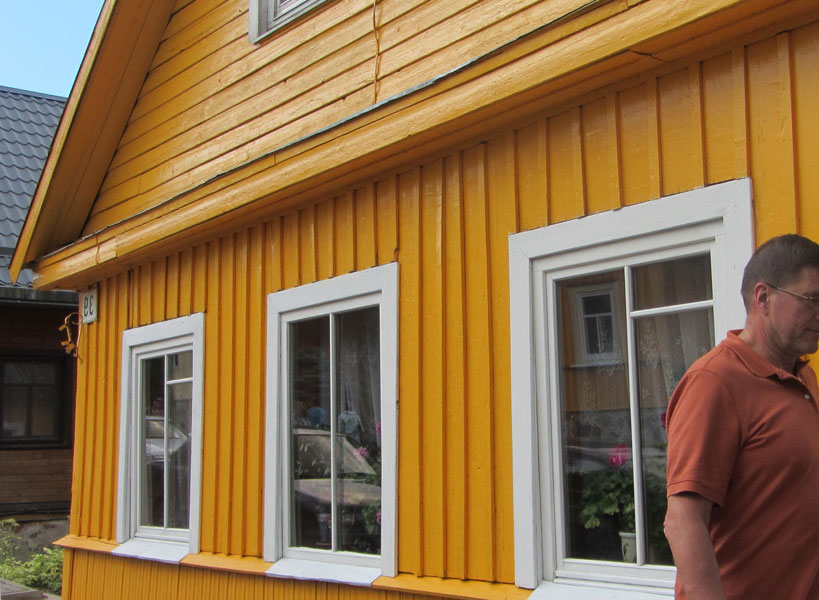
Aida pointed out to us that each Karaite house we passed was built with three windows facing the street. And therein lies a tale.
Legend has it that following the Battle of Žalgiris, the Grand Duke wanted to reward each group of allies who fought on his side. When it was their turn, a grey-haired old Karaite man approached Vytautas.
As they had been sufficiently recompensed already, he had but one request: “Please grant us permission to build our houses so that each has three windows overlooking the street?”
Vytautas was surprised and asked why.
“Our request would mean that everyone who sees a house with three windows will know that, in this house: God is worshipped; our loyalty is to the Grand Duke; and that guests are always welcome.”
Vytautas smiled, liking what he’d heard. In gratitude, he gave exclusive permission to the Karaites to build houses in Trakai with three windows on the street.
Kibinai Karaite Restaurant
We’re lunching like a native.
And we’re making their own meal.
Give a man a Big Mac and he’ll eat for a day.
Teach a man to make a kybyn and he’ll need an elastic waistband for all time.
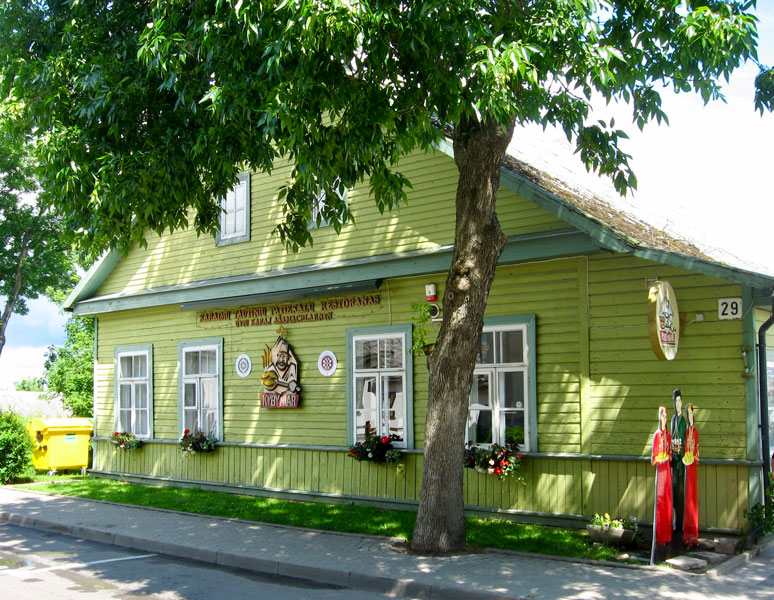
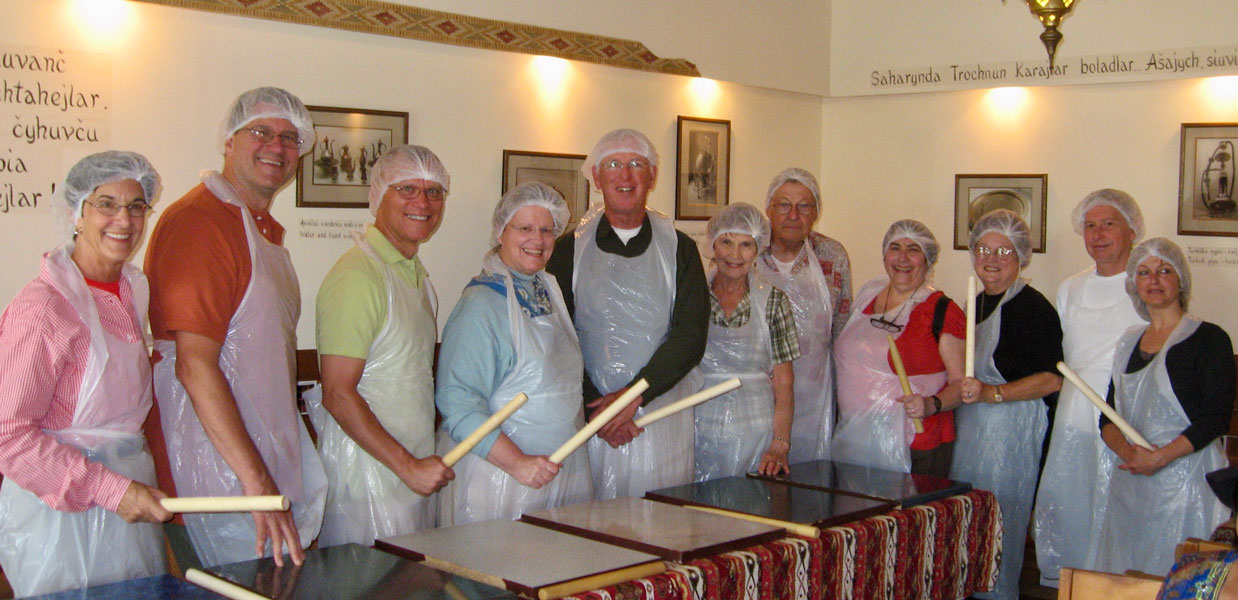
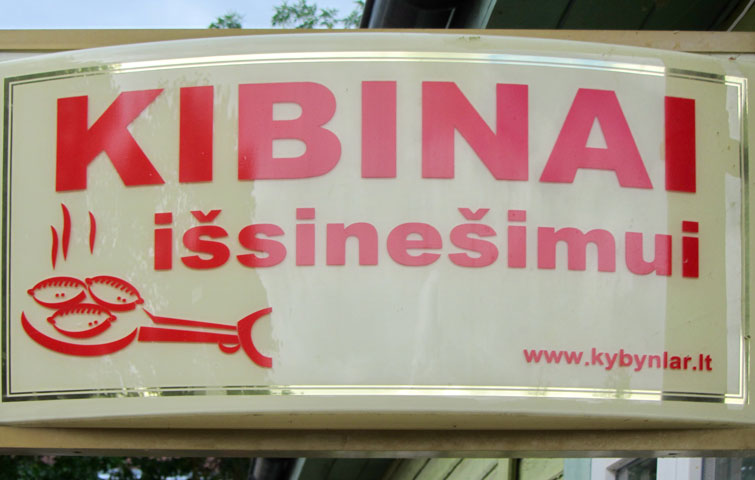
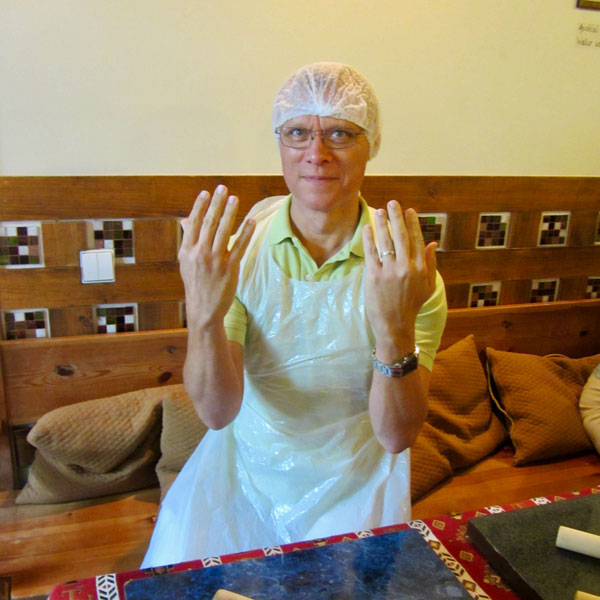
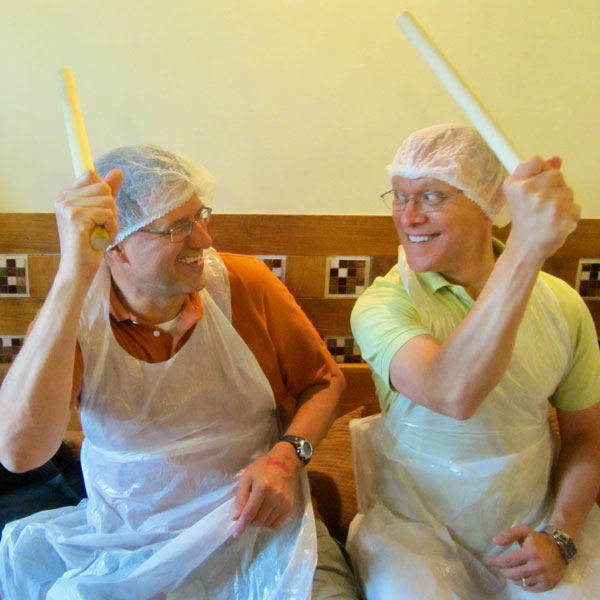
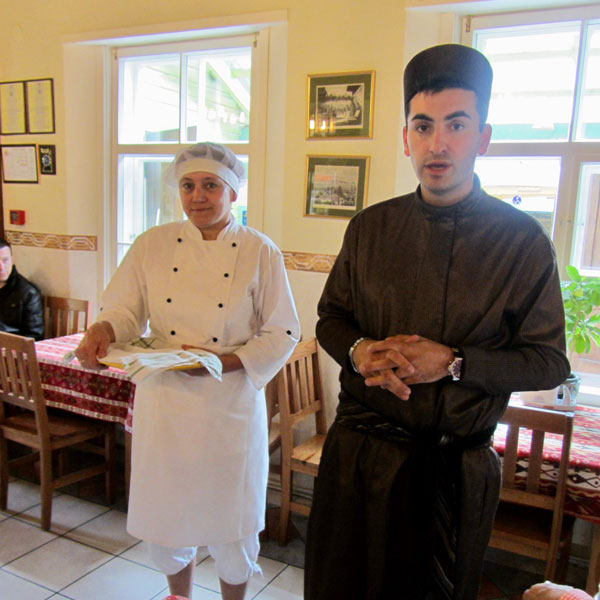
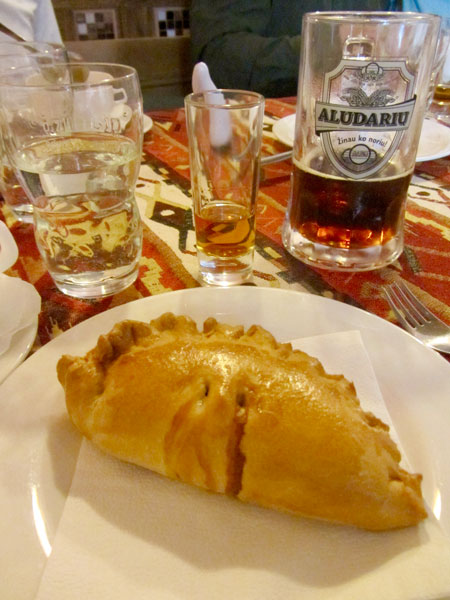
The most famous Crimean Karaite food is Kybyn. Kybynlar (plural) are half-moon shaped pies of leavened dough with a stuffing of chopped beef or mutton, baked in a dutch oven or on a baking sheet. Our group was given a mini-lesson in assembling the meat pies which became our main course for lunch once they were baked. They were delish.
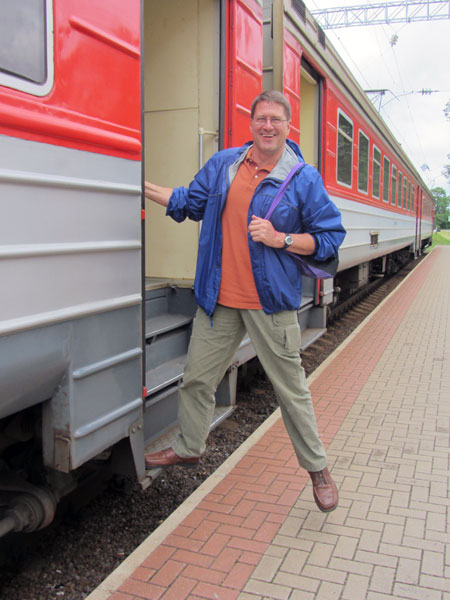
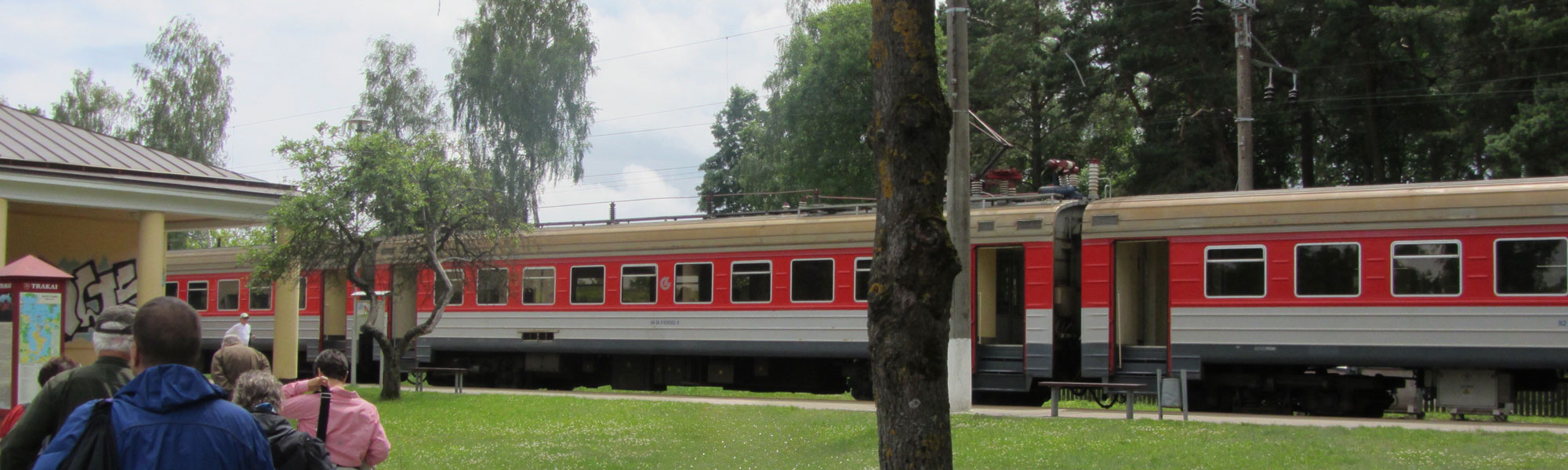
We had a little time to wander the Karaite neighborhood and use the facilities before we boarded a commuter train that took us back to the Vilnius train station.
KGB Museum
Upon returning to Vilnius, we made a sobering visit to what was informally known as the KGB Museum. The place is not without controversy.
Originally called the Museum of Genocide Victims, it was renamed the Museum of Occupations and Freedom Fights in a feeble attempt to justify its complete lack of acknowledgement of the Lithuanian Holocaust of the Litvaks (Lithuanian Jews)–an actual genocide.
I recently read that more Jews were killed in Lithuania, mostly by antisemitic Lithuanians egged on by the Germans, than in actual Germany by the Nazis.
The museum focused on the 50-year occupation of Lithuania by the Soviet Union, the anti-Soviet Lithuanian partisans, and the victims of the arrests, deportations and executions that took place during this period.
The most powerful memory I came away with was of the execution room in the building’s basement. Below a glass floor, one can see spent bullet shells and other remnants from the 1,000+ executions committed here under the KGB. Unfortunately, I knew very little of the Soviet atrocities during its occupation, much less anything of the Stalin-era deportations that are so etched into the psyche of the Lithuanian people. We were to learn much more the following day. And I have since read a number of books, both historical fiction as well as non-fiction, to round out my education on this Stalin-instigated nightmare.
Speaking of tomorrow, our days in Vilnius were coming to an end. After a light refreshment, we returned to the hotel to pack our bags and prepare for the next destination in our journey: the coastal port of Klaipeda.
 Our Baltic Adventure